The Benchmark for Juniper JNCIS Security Professionals
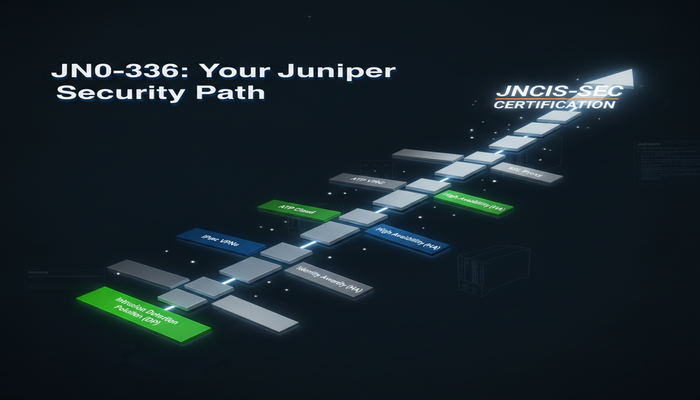
In the dynamic and ever-evolving landscape of cybersecurity, demonstrating specialized expertise is paramount. For professionals dedicated to securing networks with Juniper technologies, the Juniper Networks Certified Specialist Security certification, more commonly known as JNCIS-SEC, stands as a critical credential. This article delves deep into the JN0-336 exam, the gateway to achieving your Juniper JNCIS security certification, providing a comprehensive guide for aspiring security specialists.
The Juniper Networks Certified Specialist Security (JNCIS-SEC) certification validates an individual's advanced understanding of security technologies and configurations on Juniper Networks devices, primarily focusing on Junos OS. It signifies a professional's capability to deploy, manage, and troubleshoot security solutions, making them a highly valued asset in any organization utilizing Juniper products.
Understanding the Juniper JNCIS-SEC Certification and Its Value
The JNCIS-SEC certification is a specialist-level credential within Juniper’s extensive certification program, building upon the foundational knowledge acquired at the associate level (JNCIA-Junos). It specifically targets network professionals with intermediate knowledge of Juniper Networks Junos OS for SRX Series devices. Earning this certification is not just about passing an exam; it's about solidifying your expertise in critical security domains and proving your readiness to tackle real-world security challenges.
Why Pursue the Juniper JNCIS Security Certification?
For IT professionals, the decision to invest time and resources in a certification like Juniper JNCIS security is driven by several compelling factors:
- Skill Validation: It officially validates your ability to configure, monitor, and troubleshoot Juniper security platforms, particularly SRX Series devices. This includes advanced features like intrusion detection, VPNs, and high availability.
- Career Advancement: Holding a specialist-level certification from a reputable vendor like Juniper Networks can significantly enhance your career prospects. It opens doors to roles such as Security Engineer, Network Security Administrator, or Security Consultant. For more general insights into the field, you can explore computer and information technology occupations on the U.S. Bureau of Labor Statistics website.
- Industry Recognition: Juniper Networks is a global leader in networking and cybersecurity. Their certifications are widely recognized and respected across the industry, affirming your commitment to professional development and mastery of cutting-edge security technologies. Learn more about the company's innovations and impact on Juniper Networks Wikipedia.
- Deepened Knowledge: The preparation process for the JN0-336 exam forces a deep dive into advanced security concepts and their practical application within the Junos OS environment, ensuring a robust understanding of the subject matter.
- Competitive Edge: In a crowded job market, a specialized certification like JNCIS-SEC can set you apart from other candidates, demonstrating your niche expertise and dedication to network security excellence.
Juniper JN0-336 Exam Details: Your Gateway to JNCIS-SEC
Before embarking on your study journey, it is essential to understand the fundamental details of the JN0-336 exam. This information helps in planning your preparation strategy and understanding the logistical aspects of obtaining the JNCIS-SEC certification. For comprehensive preparation resources, including a reliable Juniper Security Specialist exam guide, visit this JN0-336 Juniper exam resource page.
Key Information for the JN0-336 Exam
- Exam Name: Security Specialist
- Exam Code: JN0-336 JNCIS-SEC
- Exam Price: $300 USD
- Duration: 90 minutes
- Number of Questions: 65 multiple-choice questions
- Passing Score: Variable (approximately 60-70%, adjusted based on exam difficulty)
- Product Version: Junos OS 24.4 (ensure your study materials align with this version)
The JN0-336 exam duration of 90 minutes requires efficient time management during the test. Understanding the JNCIS-SEC certification cost, as well as the passing score, is crucial for setting realistic expectations and budgeting for your certification journey.
Comprehensive JN0-336 Exam Syllabus: Key Topics Explored
The JN0-336 exam syllabus is meticulously designed to cover a broad spectrum of security functionalities within the Junos OS. A thorough understanding of each topic is vital for success. This section outlines the core Juniper JNCIS-SEC exam topics and provides insights into what each domain entails, integrating key secondary keywords such as Juniper Junos OS security features JN0-336 and Juniper SRX firewall JNCIS-SEC topics.
Intrusion Detection and Prevention (IDP)
Intrusion Detection and Prevention (IDP) is a cornerstone of modern network security. This section of the Juniper JN0-336 exam syllabus focuses on your ability to implement and manage IDP policies on Juniper SRX Series devices to protect against a wide range of network-based attacks.
- IDP Concepts: Understanding the difference between intrusion detection and prevention, types of attacks (signature-based, anomaly-based), and the role of IDP in a defense-in-depth strategy.
- IDP Policy Configuration: Configuring security zones, security policies, and application services to integrate IDP. This includes defining application groups, attack objects, and attack objects groups.
- Attack Database Management: Managing and updating the IDP attack signature database to ensure protection against the latest threats. This involves understanding scheduled updates and manual updates.
- Custom Signatures: Creating custom attack objects and signatures to detect specific threats unique to your network environment.
- IDP Policy Actions: Configuring various IDP actions such as permit, block, drop, close client/server, and custom actions. Understanding the impact of different action types on network traffic and security posture. \
- Monitoring and Reporting: Analyzing IDP logs, alarms, and reports to identify threats, assess the effectiveness of policies, and fine-tune configurations for optimal performance.
IPsec VPN
IPsec Virtual Private Networks (VPNs) are essential for securing communication over untrusted networks like the internet. This domain covers the configuration, management, and troubleshooting of various IPsec VPN topologies on Juniper SRX firewalls, a critical aspect of Juniper JNCIS security.
- IPsec Fundamentals: Understanding IPsec architecture, security associations (SAs), Internet Key Exchange (IKE) phases (Phase 1: Main Mode/Aggressive Mode, Phase 2: Quick Mode), and IPsec protocols (AH, ESP).
- Site-to-Site VPNs: Configuring policy-based and route-based site-to-site IPsec VPNs between Juniper SRX devices and with third-party VPN gateways. This involves defining IKE and IPsec proposals, policies, and gateways. \
- Remote Access VPNs: Implementing remote access IPsec VPNs for secure connectivity for mobile users, including configurations for IKE extended authentication (XAuth) and group VPNs. \
- NAT Traversal (NAT-T): Understanding and configuring NAT-T to enable IPsec VPNs to operate through Network Address Translation devices.
- VPN Monitoring and Troubleshooting: Using CLI commands and logs to monitor VPN status, identify common configuration errors, and troubleshoot connectivity issues.
- Advanced VPN Features: Exploring concepts like Dead Peer Detection (DPD), Anti-Replay, and PFS (Perfect Forward Secrecy) in the context of IPsec VPNs.
Juniper Advanced Threat Prevention (ATP) Cloud
In the face of sophisticated and evolving cyber threats, traditional security measures are often insufficient. Juniper Advanced Threat Prevention (ATP) Cloud provides advanced protection against malware and zero-day exploits. This JN0-336 exam topic requires an understanding of how to integrate and leverage ATP Cloud with SRX Series devices.
- ATP Cloud Overview: Understanding the architecture and components of Juniper ATP Cloud, including its role in sandboxing, threat intelligence, and dynamic analysis.
- Integration with SRX: Configuring SRX Series firewalls to send suspicious files and web content to ATP Cloud for analysis. This involves understanding threat feeds and enforcement policies.
- Policy Configuration: Defining security policies on the SRX to enforce actions based on threat intelligence received from ATP Cloud. This includes blocking malicious files, URLs, and command-and-control communications.
- File Analysis and Sandboxing: Understanding the process of file submission, analysis, and threat verdict generation within the ATP Cloud sandbox.
- Threat Intelligence Feeds: Utilizing ATP Cloud's dynamic threat intelligence feeds to automatically update SRX devices with known malicious indicators.
- Reporting and Monitoring: Interpreting ATP Cloud reports and logs to gain insights into detected threats and the overall security posture.
High Availability (HA) Clustering
Ensuring continuous network operation and security is paramount. High Availability (HA) Clustering on Juniper SRX Series devices provides redundancy and failover capabilities. This section of the Juniper JN0-336 exam syllabus covers the configuration and management of SRX clusters for maximum uptime.
- HA Concepts: Understanding different HA modes (Active/Passive, Active/Active), cluster control planes, data planes, and stateful synchronization.
- Cluster Configuration: Setting up an SRX cluster, including initial configuration, defining redundant Ethernet (reth) interfaces, and assigning IP addresses.
- Failover Mechanisms: Understanding different failover triggers (e.g., interface monitoring, chassis redundancy) and how the cluster handles stateful failover for sessions, VPNs, and NAT.
- Software Upgrade in HA: Performing non-disruptive software upgrades (NDU) in a clustered environment.
- Troubleshooting HA: Diagnosing and resolving common HA clustering issues, including split-brain scenarios and synchronization problems. \
- Chassis Cluster Redundancy Groups: Configuring redundancy groups, priority settings, and failover thresholds to control failover behavior.
Identity-Aware Security Policies
Traditional security policies based solely on IP addresses are often insufficient in modern environments. Identity-Aware Security Policies leverage user and group identities to enforce more granular and dynamic access controls. This topic explores how to implement these policies on Juniper SRX firewalls.
- Identity Management Integration: Integrating SRX Series devices with external identity sources such as Active Directory, LDAP, and RADIUS.
- User Firewall (UserFW): Configuring UserFW rules to allow or deny traffic based on authenticated user and group identities. \
- Role-Based Access Control (RBAC): Implementing RBAC policies to provide differentiated access based on user roles, regardless of their network location.
- Captive Portal: Deploying captive portal functionalities for guest access and user authentication.
- Guest Access: Configuring temporary access for guests with specific bandwidth and service limitations.
- Single Sign-On (SSO): Understanding how to achieve SSO for users accessing resources protected by SRX.
- Monitoring and Logging: Monitoring user sessions and auditing identity-based policy enforcement.
SSL Proxy
With the pervasive use of encrypted traffic (SSL/TLS), deep packet inspection becomes challenging. SSL Proxy (also known as SSL Forward Proxy or SSL Decryption) allows SRX Series devices to inspect encrypted traffic for threats while maintaining data privacy. This is a crucial Juniper JNCIS security skill.
- SSL/TLS Fundamentals: Understanding the SSL/TLS handshake process, certificates, and encryption mechanisms.
- SSL Proxy Concepts: Differentiating between SSL Forward Proxy and SSL Reverse Proxy. Focus on configuring SSL Forward Proxy for traffic originating from internal users.
- Certificate Management: Importing and managing CA certificates, server certificates, and client certificates on the SRX. Generating and signing proxy certificates.
- Policy Configuration: Configuring security policies to enable SSL proxy, specifying which traffic to decrypt and inspect.
- Exemptions and Best Practices: Understanding when to exempt certain traffic from SSL decryption (e.g., banking sites, privacy-sensitive applications) and best practices for deployment.
- Troubleshooting: Diagnosing common issues related to SSL proxy, such as certificate errors, decryption failures, and application compatibility.
Security Director
Managing complex security infrastructures across multiple devices can be challenging. Juniper Security Director is a centralized management platform that simplifies policy creation, deployment, and monitoring for SRX Series firewalls and other Juniper security products. The JN0-336 exam covers the use of Security Director for efficient security operations.
- Security Director Overview: Understanding the architecture, components, and capabilities of Juniper Security Director for centralized security management.
- Device Onboarding: Adding and managing SRX Series devices within Security Director.
- Policy Management: Creating, editing, and deploying security policies, NAT policies, VPN policies, and IDP policies from a central console.
- Security Director Concepts: Understanding policy objects, rules, zones, and address books within the Security Director interface.
- Monitoring and Reporting: Utilizing Security Director's monitoring and reporting features to gain network visibility, analyze events, and generate compliance reports.
- Troubleshooting with Security Director: Using Security Director tools to diagnose and resolve security-related issues across managed devices. \
- Workflow and Automation: Exploring how Security Director streamlines security workflows and enables automation for routine tasks.
Preparing for the JN0-336: Your Ultimate Study Guide
Success on the JN0-336 JNCIS-SEC exam requires a structured and dedicated approach. This section outlines effective strategies and resources to help you prepare thoroughly, covering aspects like the best JN0-336 study guide and how to pass JN0-336 Juniper exam.
Official Training and Resources
Juniper Networks provides official training designed to equip candidates with the necessary knowledge and skills. The recommended course for this certification is the "Juniper Security" training. This course offers in-depth coverage of the JN0-336 exam objectives and practical hands-on experience. You can find more details and schedule your training at the Juniper Learning Portal.
Additionally, Juniper's official certification page for JNCIS-SEC provides exam objectives, sample questions, and links to recommended study materials. Regularly checking the official Juniper Networks Certified Specialist Security page will keep you updated on any changes to the exam or syllabus.
Effective Study Strategies for Juniper JNCIS-SEC
To truly master the content and ensure you are well-prepared, consider the following study strategies:
- Hands-On Practice: Juniper security concepts are best understood through practical application. Set up a lab environment using virtual SRX devices (vSRX) or physical SRX firewalls. Practice configuring each syllabus topic extensively.
- Review Junos OS Basics: While JNCIS-SEC is a specialist exam, a strong foundation in Junos OS is critical. Ensure you are comfortable with basic CLI operations, routing, and policy concepts.
- Utilize Study Guides: Invest in a comprehensive Juniper Security Specialist exam guide. Look for resources that break down the syllabus topics, provide examples, and offer practice questions.
- Flashcards and Notes: Create flashcards for key terms, commands, and concepts. Summarize each topic in your own words to reinforce understanding. \
- Join Study Groups: Collaborating with peers can provide new perspectives, help clarify difficult topics, and motivate your study efforts.
- Time Management: Allocate specific study blocks for each domain, ensuring you dedicate more time to areas where you feel less confident.
Leveraging JN0-336 Practice Questions
Practice questions are invaluable for exam preparation. They help you:
- Assess Knowledge Gaps: Identify areas where your understanding is weak and require further study.
- Familiarize with Exam Format: Get accustomed to the types of questions asked and the overall structure of the exam.
- Improve Time Management: Practice answering questions within a time limit, which is crucial for the 90-minute JN0-336 exam duration.
- Build Confidence: Regularly performing well on practice questions can boost your confidence for the actual test.
Seek out reputable sources for JN0-336 practice questions that closely mimic the difficulty and style of the real exam. Combining these with a solid Juniper JNCIS-SEC study material will significantly improve your chances of success.
Understanding JNCIS-SEC Certification Prerequisites
Before you even consider tackling the JN0-336 exam, it's crucial to understand the JNCIS-SEC certification prerequisites. Candidates must first hold the Juniper Networks Certified Associate - Junos (JNCIA-Junos) certification. This ensures that you have a fundamental understanding of Junos OS before diving into advanced security concepts. You can find more information about effective study tips for related Juniper certifications like the JN0-334 JNCIS Security on this previous blog post.
The Juniper Networks Certified Specialist Security Certification Path
The JNCIS-SEC is a stepping stone in Juniper's security certification track. It follows the JNCIA-Junos and precedes the Juniper Networks Certified Professional Security (JNCIP-SEC) and ultimately the Juniper Networks Certified Expert Security (JNCIE-SEC). This structured Juniper Networks Certified Specialist Security certification path allows professionals to progressively build their expertise and demonstrate mastery at increasingly advanced levels, proving their comprehensive understanding of Juniper JNCIS security.
Registering for the JN0-336 Exam
Once you feel confident in your preparation, the next step is the JN0-336 exam registration process. Juniper Networks utilizes Pearson VUE for its certification exams. You will need to create an account or log in to your existing account on the Pearson VUE website.
Steps for JN0-336 Exam Registration:
- Visit the Pearson VUE Juniper Networks page.
- Log in or create a new account.
- Search for the JN0-336 exam.
- Select your preferred testing location (online proctored or a testing center) and desired date/time.
- Complete the payment of the JNCIS-SEC certification cost ($300 USD).
- Confirm your appointment.
It's advisable to schedule your exam in advance to secure your preferred slot and to give yourself a firm deadline for study completion.
Career Opportunities with JNCIS-SEC
Achieving the JNCIS-SEC certification significantly enhances your professional credibility and marketability in the cybersecurity domain. This certification validates advanced skills in Juniper JNCIS security, making you an attractive candidate for various roles.
Roles Benefiting from JNCIS-SEC:
- Network Security Engineer: Responsible for designing, implementing, and maintaining security solutions.
- Security Administrator: Manages day-to-day security operations, including policy enforcement, monitoring, and troubleshooting.
- Security Analyst: Focuses on detecting, analyzing, and responding to cyber threats.
- Systems Engineer: Integrates Juniper security solutions into broader IT infrastructures.
- Consultant: Provides expert advice and implementation services for Juniper security products.
The demand for skilled cybersecurity professionals continues to grow exponentially. Holding a specialized certification like JNCIS-SEC demonstrates your commitment to the field and your expertise in a leading vendor's technology. Professionals pursuing a Juniper Networks Certified Specialist Security credential often find themselves in roles that require a deep understanding of network defense strategies and practical configuration abilities on Juniper devices. This can lead to lucrative opportunities and career progression, as seen in the general trends for Juniper Networks JNCIS-SEC jobs.
Frequently Asked Questions About Juniper JNCIS Security
1. What is the JNCIS-SEC certification and what does it validate?
The JNCIS-SEC (Juniper Networks Certified Specialist Security) certification validates an individual's intermediate-to-advanced understanding of security technologies and configurations on Juniper Networks devices, particularly the SRX Series. It proves a professional's ability to deploy, manage, and troubleshoot various security features using Junos OS.
2. What are the prerequisites for taking the JN0-336 exam?
To be eligible for the JN0-336 exam, candidates must first hold the Juniper Networks Certified Associate - Junos (JNCIA-Junos) certification. This foundational certification ensures a baseline understanding of Junos OS before moving to specialist-level security topics.
3. How long is the JN0-336 exam and how many questions are there?
The JN0-336 exam has a duration of 90 minutes and consists of 65 multiple-choice questions. Efficient time management is crucial to complete all questions within the allotted time.
4. What kind of topics are covered in the Juniper JN0-336 exam syllabus?
The JN0-336 exam syllabus covers a wide range of security topics including Intrusion Detection and Prevention (IDP), IPsec VPNs, Juniper Advanced Threat Prevention (ATP) Cloud, High Availability (HA) Clustering, Identity-Aware Security Policies, SSL Proxy, and centralized management with Security Director.
5. What study materials are recommended for the JNCIS-SEC?
Recommended study materials for the JNCIS-SEC include the official Juniper Security training course, a comprehensive Juniper Security Specialist exam guide, hands-on lab practice with SRX Series devices or vSRX, and practicing with JN0-336 practice questions. Reviewing official Juniper documentation and community forums can also be beneficial.
Conclusion
The Juniper JNCIS security certification, earned by passing the JN0-336 exam, is a powerful testament to a security professional's expertise in Juniper Networks technologies. It not only validates crucial skills in implementing and managing advanced security solutions but also significantly boosts career opportunities in the ever-growing field of cybersecurity. From mastering IDP and IPsec VPNs to understanding ATP Cloud and HA Clustering, the JN0-336 prepares you for the complex challenges of protecting modern networks.
By diligently following a structured study plan, utilizing official training resources, and gaining hands-on experience, you can confidently approach the exam and achieve this valuable credential. The JNCIS-SEC is more than just a certificate; it's a badge of honor that distinguishes you as a highly capable Juniper Networks Certified Specialist Security professional, ready to contribute meaningfully to any organization's defense strategy. For those looking to further enhance their Juniper expertise, exploring resources such as a Juniper JN0-637 breakdown of exam topics could be your next step.
Begin your journey today to become a recognized expert in Juniper JNCIS security. Your future in network security awaits!



Comments
Post a Comment